A Winter Window Seat, Arranged for Reading
Arrange a winter window seat for reading with a chair, lamp and book surface placed to suit daylight, draughts and the way you settle in.
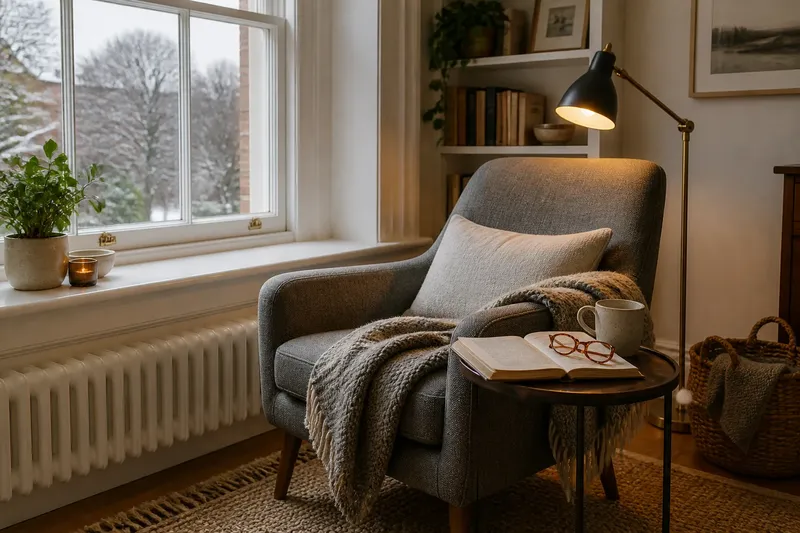
A winter window seat for reading needs more than a view: the page must stay comfortable to read as daylight shifts, and the seat must feel usable beside cold glass. Arrange the chair, book surface and lamp around the room’s actual conditions rather than treating the window as an automatic reading spot.
Where should a winter reading seat go?
Place the seat near enough to benefit from the window’s daylight, but far enough away that cold glass or a draught does not make you shift position. A freestanding chair can sit at an angle beside the window, keeping the view while avoiding the coldest patch.
Check the spot at the time you are most likely to read. Notice where the light falls, whether a radiator is nearby and whether opening the window would leave the chair in the way. Keep a clear route past the seat so it belongs to the room rather than blocking it.
If the window has a deep sill or built-in bench, sit there before adding cushions. A firm seat with back support may work better than a pile of soft cushions that pushes you forwards. For a narrow ledge, use a separate chair instead of treating the sill as a seat.
How can daylight reach the page comfortably?
For a right-handed reader, daylight coming from the left can reduce the shadow cast by the hand across the page; a left-handed reader may prefer light from the right. Treat this as a starting point, not a rule, because the window’s direction and the book’s position also affect the result.
Turn the chair or book until the page looks evenly lit and you are not squinting at glare. If direct sun lands sharply on the paper, angle the seat away from the beam or adjust the window covering. Comfortable, usable light matters more than the brightest patch.
Winter daylight changes as clouds pass and the afternoon draws on. Keep a reading lamp within reach for when natural light fades, and position it so the shade does not block the window or shine into your eyes. A moveable table lamp is easier to adjust than relying on a fixed ceiling light.
What should sit beside the chair?
Choose a side table that holds the items you use without crowding the seat. Check whether its top can hold your book and glasses, then decide: if both fit without making the route awkward, keep the table; if not, try a smaller table or a stable stool.
Place the surface on the side that feels natural for your reading hand. Reach for a book and set it down without twisting; if you have to lean or turn sharply, move the table. A broad, stable sill can hold a book or glasses if they will not be knocked or exposed to condensation.
Say you have a narrow armchair beside a sash window, with a book and glasses currently resting on the floor. Move a slim table to the chair’s open side and place both items on it. The expected result is a reachable landing place; if the table narrows the walking route, move it closer to the chair or use a smaller surface.
How can you make the seat feel warmer?
Use a cushion or folded wool blanket where your body needs support rather than covering every surface. A cushion behind the lower back can help you sit upright, while a lap blanket adds warmth without changing the layout.
Keep fabric clear of heaters and do not block a radiator with a chair or draped blanket. If the floor feels cold, a rug beneath the seat can soften it underfoot, provided the rug lies flat and leaves the walking route clear.
Think of the arrangement like a bedside table: a few useful items close at hand make the spot work, while extra objects crowd it. Add a cushion, throw or table only when it addresses a comfort or access problem you can identify.
What should you check before settling in?
Sit in the seat with a book before deciding the arrangement is finished. A short reading session reveals awkward reaches, glare and draughts more clearly than judging the furniture from across the room.
- Page light: Check whether you can read without squinting. If glare or hand shadows distract you, turn the chair or book; otherwise, leave its position as it is.
- Back support: Check whether you can sit upright comfortably. If you lean forwards or slump, reposition a cushion; otherwise, keep the seat as arranged.
- Reach: Check whether you can set down a book and pick up your glasses without twisting. If not, move the table to the easier side; if the route becomes crowded, choose a smaller surface.
- Warmth: Check whether you feel a draught or cold from the glass. If you do, shift the seat away from the window or use a lap blanket; if neither helps, use the seat at a warmer time of day.
- Clear space: Check whether people can pass the chair easily. If the route feels tight, move the chair or remove an extra piece; otherwise, keep the layout.
- Evening light: Check whether the page stays visible as daylight fades. If it does not, add a lamp within reach and direct its beam onto the page; if it does, no extra lamp is needed.
Which questions do readers ask about a winter window seat?
Is a window seat better than a separate chair?
A built-in seat can make good use of a deep recess, while a separate chair is easier to move away from a draught or angle towards the light. Choose according to the room’s shape and the seat’s comfort, not simply because the window suggests a bench.
Should the reading lamp sit beside or behind the chair?
Place it where the light reaches the page without shining into your eyes or being blocked by your head. A lamp beside the chair is easy to adjust; one behind can work if its beam falls clearly over the book.
Can you read comfortably in direct winter sun?
Sometimes, but a bright patch can create glare on pale pages and make the light uneven. Turn the chair slightly or soften the sun with a window covering so the page remains easy to read.
What if the window sill is too narrow for a book?
Use a small side table or a stable stool beside the seat, leaving room to move around it. Keep the book surface within comfortable reach rather than balancing a book on the sill.
How should the arrangement change through winter?
Let the seat’s position respond to the room as daylight changes. If it feels pleasant in the morning but cold later, move it farther from the glass or use it during the brighter part of the day. For a winter window seat for reading, the useful test is simple: can you see the page, sit comfortably and reach your book without obstructing the room?