The Matching Furniture Myth: When a Room Benefits from Contrast
Furniture contrast helps a room feel collected, not cluttered. Learn how to combine shapes, finishes and proportions while keeping the layout visually coherent.
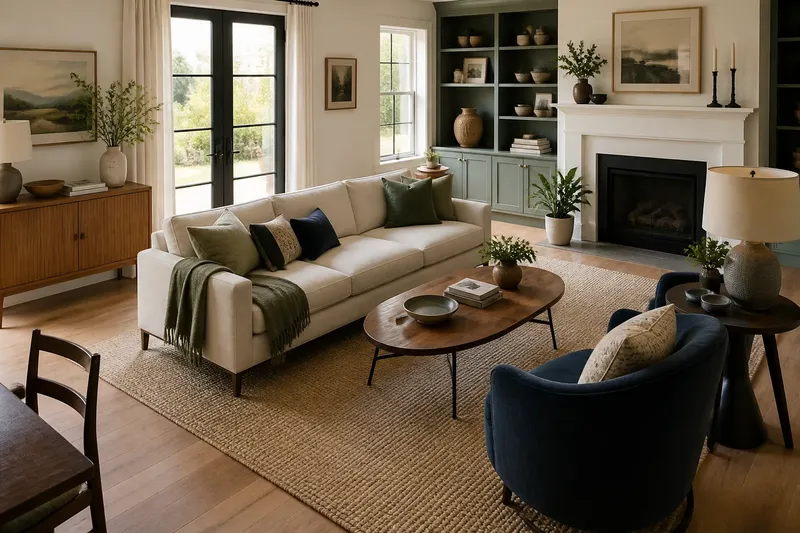
Furniture contrast can make a room feel collected rather than cluttered when each difference has a clear purpose. In a living room, a rounded chair beside a straight-edged sofa can add character; several unrelated shapes, finishes and focal points can make the same space feel unsettled.
Think of a room as a shelf of books: a few shared colours or proportions help the eye read the group, while a distinct cover gives it interest. The connection need not be a matching set. It might be a repeated curve, a common timber undertone or a similar visual scale.
Which details should connect mixed furniture?
Choose a small number of visible links before introducing contrast. Look at the pieces already in the room and identify a detail you can repeat without copying an entire silhouette or finish.
- Check whether two timber pieces share a warm, cool or neutral undertone; if they do, let that be the link, but if their tones clash, separate them with a painted or upholstered piece.
- Check whether chair legs and a table base share a slim or substantial profile; if they do, repeat that proportion, but if they compete, keep one form visually quieter.
- Check whether a curve appears in a sofa arm, mirror or cabinet edge; if it does, echo it once elsewhere, but if curves already dominate, choose a straighter piece.
- Check whether the room already repeats a dark metal finish; if it does, use it on one more small detail, but if it has no existing connection, avoid scattering dark accents around the room.
- Check whether a prominent piece has a clear role; if it anchors a seating area or provides storage, retain it as the visual lead, but if it has no practical or compositional purpose, consider moving it.
- Check whether open floor remains visible around bulky furniture; if it does, a solid companion may balance the arrangement, but if the area feels crowded, choose an open-legged or smaller piece instead.
How do shapes and proportions affect the mix?
Pair forms that have different jobs rather than simply collecting contrasting outlines. A broad, enclosed sofa can sit with a slim-legged oval coffee table: the sofa anchors the seating, while the table leaves more floor visible and softens the arrangement.
Keep scale and use in view. A table that looks delicate beside a deep sofa may also be awkward for everyday use; a more substantial top can preserve the contrast if its base remains visually light. In a room with a strong fireplace or built-in shelving, quieter furniture nearby can keep the architecture from competing with too many bold outlines.
How can you mix furniture finishes?
Compare finishes in the room, not just in a shop or on a screen. Place a timber sample beside the floor and the largest existing furniture piece, then look at it in daylight and under the lamps you use in the evening.
Notice undertones as well as colour: a wood that seems neutral alone may look red or grey beside another surface. Sheen also changes the balance. If several pieces are glossy, a matt or brushed finish can settle the arrangement; if everything is subdued, one reflective detail may provide a point of focus.
Where should the strongest contrast sit?
Give the room one clear lead rather than asking every piece to attract attention. A distinctive armchair, painted cabinet or sculptural table can take that role, while nearby furniture uses calmer shapes or finishes.
Say you have a pale, straight-lined living room and a dark, curved armchair. Put the chair beside the sofa where it can be seen from the doorway, keep the nearby table simple, and repeat the dark finish once in a lamp base. The expected result is one readable focal point with a modest connection; if the chair still dominates every view, move it out of the main sightline rather than adding more dark accents.
What changes in a small room?
In a compact room, preserve visible floor around the largest pieces and use contrast selectively. Open-legged furniture can make the layout look less enclosed, while one closed cabinet can still provide useful storage.
A dark piece is not automatically wrong in a small space. Check whether it blocks a route or crowds another heavy item; if it does, relocate it or choose a lighter-looking form, but if the route remains clear and the piece anchors a quiet corner, it may help the room feel composed.
How can you tell when contrast has become clutter?
Look for neighbouring items that both claim attention, unrelated finishes with no connecting detail, or furniture crowding the same part of the room. Remove or move one distracting object before buying another piece to compensate.
Check the view from the doorway and the main seat. If a focal piece is hidden behind something larger, change its position; if too many bold outlines compete, let one area recede by clearing its surface or moving a piece elsewhere. Open space is part of the arrangement, not a gap that must be filled.
Which furniture contrast questions come up most?
Can different wood tones go in one room?
Yes, if they relate through warmth, depth or another visible detail. Compare samples beside the floor and one another; if the tones fight, separate them with a painted surface or upholstered piece.
Does every piece need a matching partner?
No. A chair can connect to a table through scale, shape or finish without belonging to a set. If the room still feels disconnected, repeat one small detail elsewhere rather than matching every item.
How do you mix modern and traditional furniture?
Link the pieces through a shared outline, material tone or visual weight. If a contemporary table and traditional chair look unrelated, quieten the surrounding forms or finishes before adding another style.
What should you do if a piece looks out of place?
Move it beside a related colour or shape and clear competing objects around it. If it still disrupts the main view, try it in another zone before deciding that the piece itself is the problem.
How can you plan a furniture contrast before buying?
Mark proposed furniture footprints with paper or painter’s tape, and hold finish samples or cushions where the pieces would sit. Check walking routes, sightlines from the entrance and whether one area carries too much visual weight; if a route narrows or the arrangement crowds one corner, change the proposed position or size.
For furniture contrast, the useful test is whether each difference has a role and a visual link. Keep the pieces that serve the room, adjust the ones that compete, and leave enough open space for the arrangement to read clearly.