Why a Doorway Can Change the Feel of a Room
Doorway design shapes how adjoining rooms meet. Learn how the opening’s outline, trim and position affect privacy, visual rhythm and the character of both spaces.
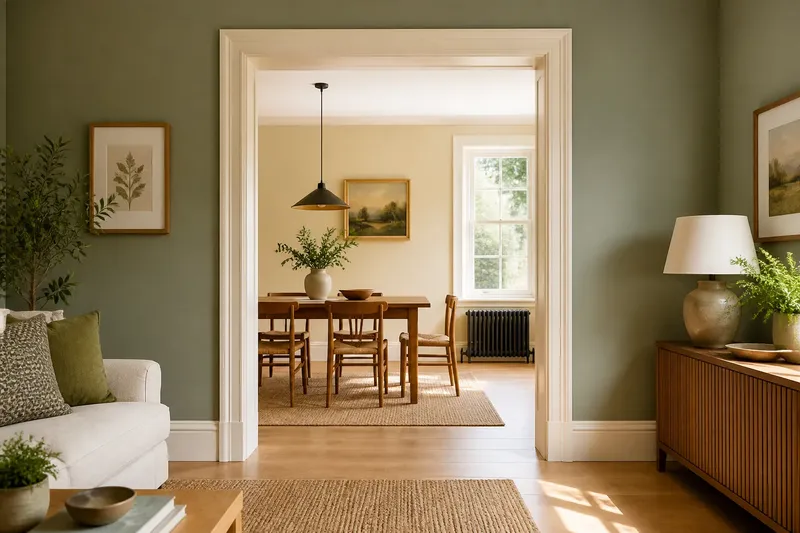
A doorway can turn a shared wall into a deliberate architectural feature. Doorway design is shaped not only by the opening’s width and position, but also by its outline, depth and relationship to the rooms on either side.
How does a doorway shape the boundary between rooms?
An opening is more than a route through a wall: it marks where one room gives way to another. A square, unadorned opening can feel direct, while a framed doorway gives the transition a clear visual edge. An arch changes that edge into a softer curve.
Consider the character of both rooms together. A doorway can help them feel related through matching trim or paint, or make their difference more apparent with a distinct frame. Neither approach is automatically better; the choice depends on whether you want continuity or a more defined threshold.
What does the doorway’s outline contribute?
A square opening tends to suit interiors built around straight lines, such as simple skirting boards and plain window surrounds. An arch can echo curved details elsewhere, but it may feel out of step if every neighbouring feature is angular. Look at existing mouldings, door hardware and window frames before settling on a shape.
A visible architrave makes the boundary more pronounced. A slim profile can sit quietly against a plain wall, while a deeper or more decorative profile gives the opening greater presence. Think of trim as a picture frame: it changes how the edge reads without changing the scene beyond it.
Paint also affects that edge. Matching the frame to the wall makes it less prominent; a contrasting colour draws attention to the opening. Consider the finish from both rooms, since the doorway belongs visually to each one.
How can the opening connect two different interiors?
When adjoining rooms have distinct colours or materials, the doorway can either bridge them or underline the change. A frame that repeats a detail from both spaces can provide a visual link. A simpler frame can let each room keep its own character without adding another competing feature.
Imagine a hypothetical home with a sitting room in muted green and a dining room with warm cream walls; both have plain, square window surrounds. The owner considers an ornate architrave, then compares a simple square frame painted to match the existing surrounds. The second option echoes a detail already present in both rooms, so the visual transition is quieter; the trade-off is less emphasis on the doorway itself.
Before choosing a finish, hold removable paint cards or pieces of card against the existing trim. Check them under daylight and the room’s usual evening lighting. This helps you judge whether a frame recedes or stands out without relying on how a colour looks on a screen.
Which doorway questions should guide your design?
Does an arched doorway suit a traditional house?
It can, particularly if the home already has curved details or softer profiles. Compare the arch with nearby windows, skirting and other openings; if their lines are strongly square, a curve may become an isolated feature.
Should doorway trim match the skirting boards?
Matching profiles can make the interior feel consistent, but the trim need not be identical. A simpler doorway surround may sit comfortably beside more detailed skirting if their finishes and proportions do not compete.
Will a contrasting frame make the doorway stand out?
Usually, a clear difference in colour draws the eye to the frame. If you want the opening to feel quieter, try a finish close to the surrounding wall or existing trim.
Can I change a doorway’s shape myself?
Changing the opening can involve building work, and its feasibility depends on the wall and applicable requirements. Ask a suitably qualified building professional to assess the proposed alteration before work begins.
What should you check before choosing a finish?
Use this short comparison list to decide whether the doorway should blend in or become a feature. For every item, look for the stated visual result and follow the relevant if/then choice.
- Check whether nearby window surrounds are plain or decorative; if the profiles are simple, choose a restrained doorway trim, then consider a more detailed profile only if it repeats another feature in the room.
- Check whether both rooms share a wall colour or finish; if they do, match or closely echo it at the frame, but if they differ, choose a trim tone that sits comfortably with both.
- Check whether the doorway should recede or draw attention; if it should recede, use a finish close to the wall, but if it should stand out, select a deliberate contrast and review it from both sides.
- Check whether an arch would repeat an existing curve; if a related curve is already present, compare an arched outline, but if the surrounding details are angular, retain a square opening or seek a cohesive design alternative.
- Check whether the frame looks balanced beside the skirting and window trim; if one element dominates, simplify or adjust the proposed profile, but if the details sit comfortably together, keep the treatment.
- Check whether a paint card looks different in daylight and evening light; if its appearance shifts in a way you dislike, choose another sample, but if it remains suitable in both conditions, proceed to a larger removable sample before painting.
Doorway design is easiest to judge as a relationship between the opening and the architectural details around it. Compare the shape, trim and finish with features in both adjoining rooms, and choose the treatment that gives the transition the character you want.